The few times that I tried to cook scallops I never could get them beyond looking pale, limp and soggy. I found the following explanation very interesting.
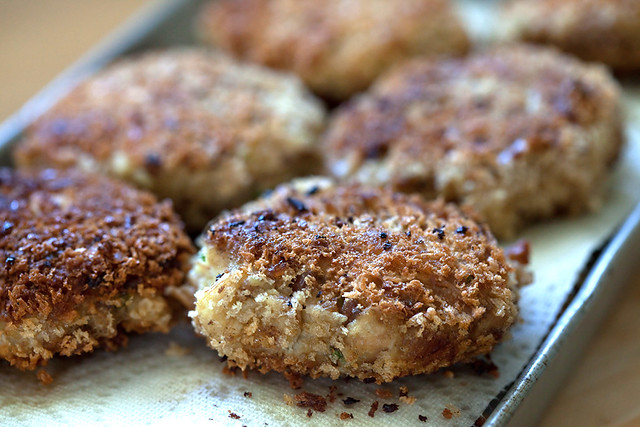
Disclaimer: All of the below is copied and pasted portions (including the photo) of an article from the site Serious Eats. It is written by Managing Culinary Director J. Kenji López-Alt. Here is a link to the full post: The Food Lab: How to Sear Scallops
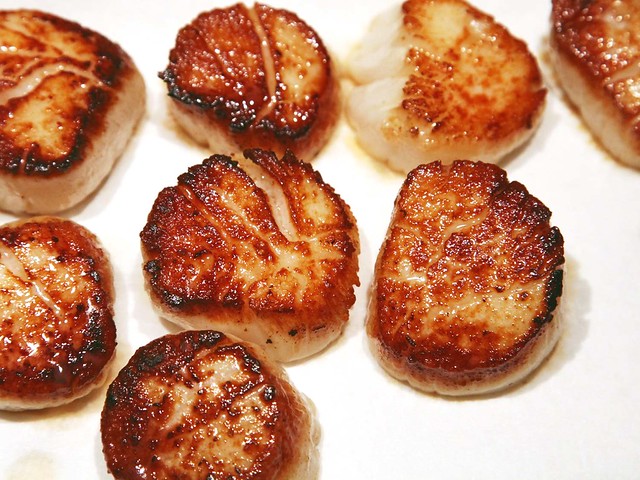
The first problem with scallops occurs before you even buy them. Many scallops are treated with sodium tripolyphosphate (STP), a chemical that, while perfectly safe to consume, wreaks havoc on your ability to achieve a proper sear. STP loosens the structure of proteins in scallops, causing them to suck up excess moisture like a sponge—up to 30% of their original weight.
Dry scallops, on the other hand, are untreated and therefore expel less moisture as they cook. Sure, they're pricier—they have a much shorter shelf life, and their price per pound isn't artificially deflated with excess water weight—but they more than make up for it in superior quality, flavor, and ease of cooking.
Once you've got yourself the right scallops, your battle is 90% won. But there are still a couple of small obstacles in the way. Even though dry scallops expel far less moisture than wet scallops, they can still throw off a dangerous amount of water as they cook, forcing you to use up precious energy from the pan for the massively inefficient process of evaporation.
My favorite technique is to simply salt the scallops and let them rest on a paper towel–lined plate. The salt draws liquid out of the scallops, and the paper towel wicks it away. Your scallops will be dry to the touch in just about 15 minutes.
We're on the home stretch here—all that's left to do is sear them. You want a pan that is large enough to hold the scallops and leave enough room to allow the moisture to evaporate rapidly. Once the pan is smoking, the scallops go in.
I cook them without moving them until a little peek underneath reveals a deep golden crust. If you've followed all of the drying steps properly, and if you started with a screaming hot pan, you should have no problem crusting up both sides of those scallops on even the most average of home ranges.